
Ibrahim Abu-Lughod Fellow
Academic Year 2026-27
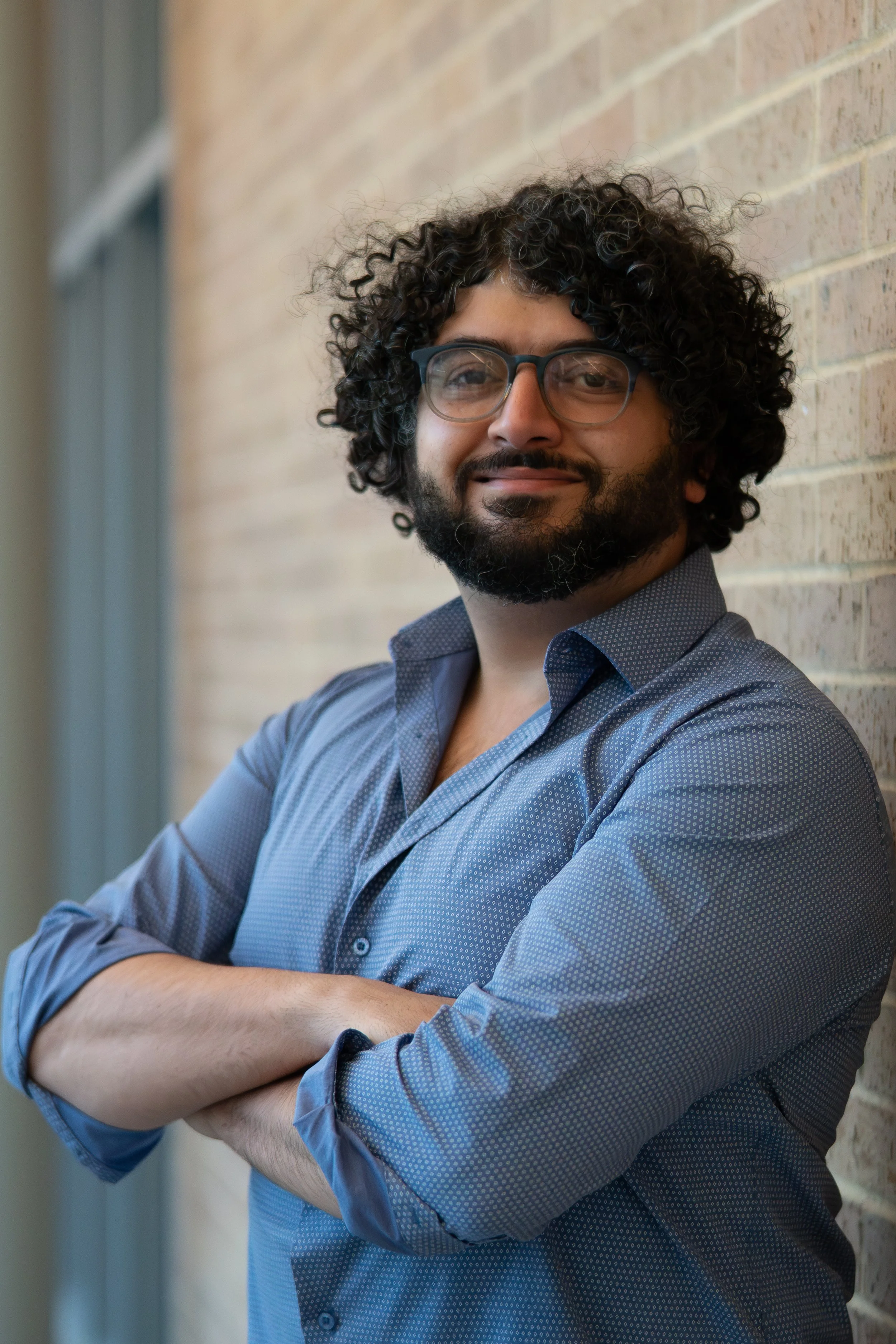
Samee Sulaiman is an anthropologist whose research and teaching focus on disability, political violence, mobility, and social movements in Lebanon and Palestine. He received his PhD in Anthropology from Brown University in 2023 and was previously a Postdoctoral Research Associate in Palestine Studies at Yale University’s Council on Middle East Studies. His research has been supported by the Social Science Research Center International Dissertation Research Fellowship.
Samee Sulaiman is working on his first book project, States of Doubt: Disability, Mobility, and Crisis in Lebanon, which examines how people with disabilities navigate mobility, political belonging, and recurring crisis in Lebanon. Based on ethnographic and historical research on the disability rights movement founded during the Lebanese Civil War, the book follows Lebanese citizens and Palestinian refugees with disabilities as they organize across sectarian, political, and geographical divisions. Their activism challenges institutions and infrastructures that continually render participation in public life uncertain, from inaccessible schools and government offices to broken elevators, obstructed sidewalks, and unequal access to employment and social services.
The book develops the concept of disability as a “genre of doubt” to describe how this uncertainty becomes an embodied and political condition. Everyday encounters with inaccessible spaces generate hesitation about whether one can enter a building, reach a meeting, secure work, or make claims upon the state. For Palestinian refugees with disabilities, these uncertainties are intensified by statelessness, legal restrictions, and exclusion from many forms of employment and social protection. Yet disability can also open unexpected forms of mobility and political connection. During the civil war, disability sometimes enabled passage across checkpoints that restricted movement according to sectarian identity. In the postwar period, disability organizing has similarly brought Lebanese citizens and Palestinian refugees together in ways that challenge sectarian divisions and the political limitations imposed by statelessness.
By tracing the disability rights movement from the civil war through Lebanon’s postwar reconstruction and recurrent crises, States of Doubt argues that disability offers a critical perspective on the Lebanese political order and its unequal distribution of mobility, care, and recognition. It also shows how Lebanese and Palestinian disabled activists have transformed experiences of uncertainty and exclusion into collective demands for accessibility, rights, and forms of political belonging that exceed the boundaries of sect and citizenship.
